

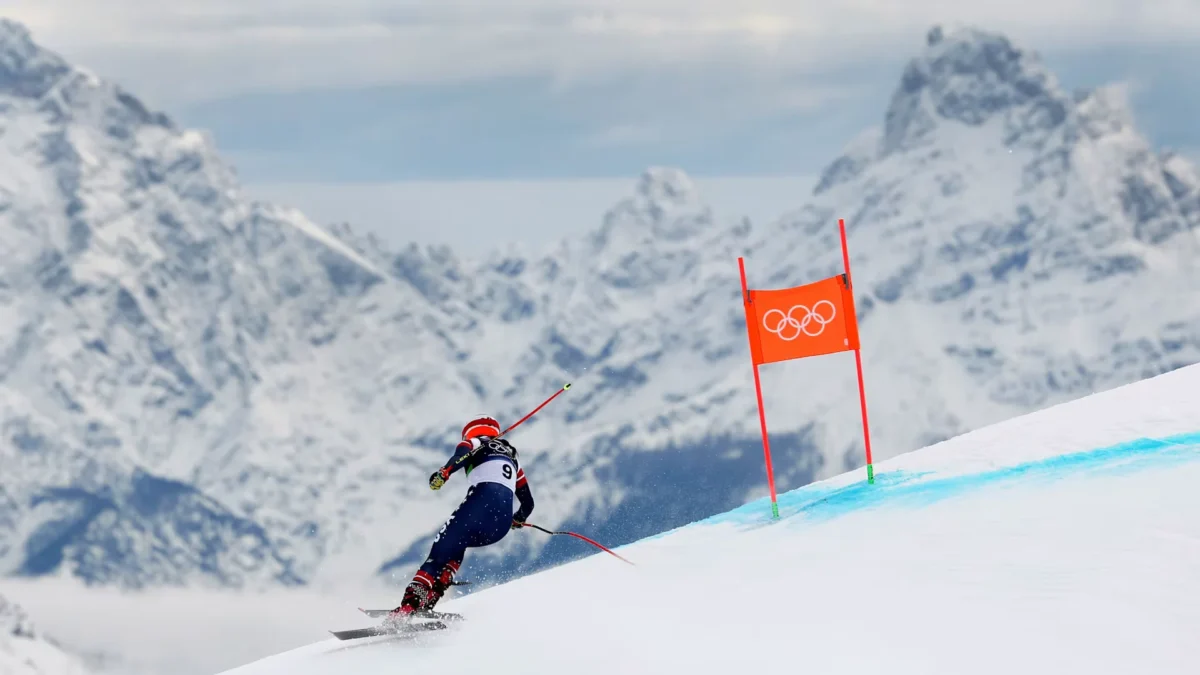
Following the success of the 2024 Summer Olympics, France will host the 2030 Winter Olympic and Paralympic Games in the French Alps. The official award was validated by the International Olympic Committee.
Unlike past editions focused on a single city, the 2030 model is based on a multi-site organization, capitalizing on existing infrastructure to limit new construction and meet current environmental requirements.
Where will the 2030 Winter Olympics take place?
The 2030 Winter Olympics will take place in the French Alps from 1 to 17 February 2030, under a multi-site format. Nice will host ice sports, while alpine skiing and mountain disciplines are shared between Savoie and Haute-Savoie — Courchevel, Méribel, La Plagne and Val d’Isère. The award was validated by the International Olympic Committee in July 2024.
Nice
Nice will host ice sports (figure skating, ice hockey, short track, curling).
The city already has suitable facilities, which limits heavy structural investment.
Savoie and Haute-Savoie
Alpine skiing events and mountain disciplines will take place in internationally recognized resorts:
- Courchevel
- Méribel
- La Plagne
- Val d’Isère
These resorts have already hosted world competitions (World Cup, World Championships, 1992 Games for some). They have existing sports infrastructure that meets international standards. The strategic choice is clear: leveraging a proven sporting heritage rather than building on a massive scale.
Why were the French Alps chosen?
The IOC selected the bid for several objective reasons:
- Infrastructure already operational
- Historical organizational expertise (Albertville 1992)
- High-end hotel capacity
- International accessibility
- Environmental commitment aligned with Olympic Agenda 2020+5
The bid is based on a sober and sustainable model, which corresponds to the new requirements of the Olympic movement.
Economic and real estate impact of the 2030 Olympics
The awarding of the Games is not merely symbolic. Historically, Olympic territories observe:
- a progressive increase in real estate demand
- an improvement in transport infrastructure
- a strengthening of international reputation
- increased pressure on premium land
In the Alps, the constraint is even stronger: land is limited by geography and environmental regulations. The Games do not increase supply. They stimulate demand.
Why invest before 2030?
The Olympic effect works in three phases:
Phase 1: anticipation (2025–2027)
Strategic investors position themselves before the general increase.
Phase 2: increased visibility (2027–2029)
International media amplify the attractiveness of host resorts.
Phase 3: legacy effect (post-2030)
Modernized infrastructure and strengthened reputation provide long-term support for asset values. In resorts like Courchevel or Méribel, the market is already structurally tight. The Olympic announcement reinforces this dynamic rather than creating it.
Resorts with strong momentum
Certain resorts benefit particularly from the context:
- Courchevel: ultra-premium positioning and a consolidated international clientele
- Méribel: a balance between authenticity and global appeal
- Val d’Isère: a strong sporting culture and extended seasonality
- La Plagne: significant capacity and potential for value appreciation
These territories combine:
- reputation
- land scarcity
- existing infrastructure
- consolidated tourist appeal
A structured wealth opportunity
Investing in the French Alps today is based on clear fundamentals:
- Limited supply
- Growing international demand
- Catalytic effect of the 2030 Olympics
- Solid seasonal rental market
- Safe-haven value in times of macroeconomic uncertainty
The approach must nevertheless remain selective. Not all properties benefit from the same potential. Precise location, ski access, exposure, architectural quality, and energy performance become determining criteria.
A sustainable dynamic beyond 2030
The French Alps will enter 2030 under the global spotlight. But the investment momentum begins now. In a market where scarcity is structural and international demand is sustained, anticipation becomes a strategic advantage. For a savvy investor, the question is not whether the Olympics will have an impact. The question is identifying the assets capable of capturing this value over the long term.