

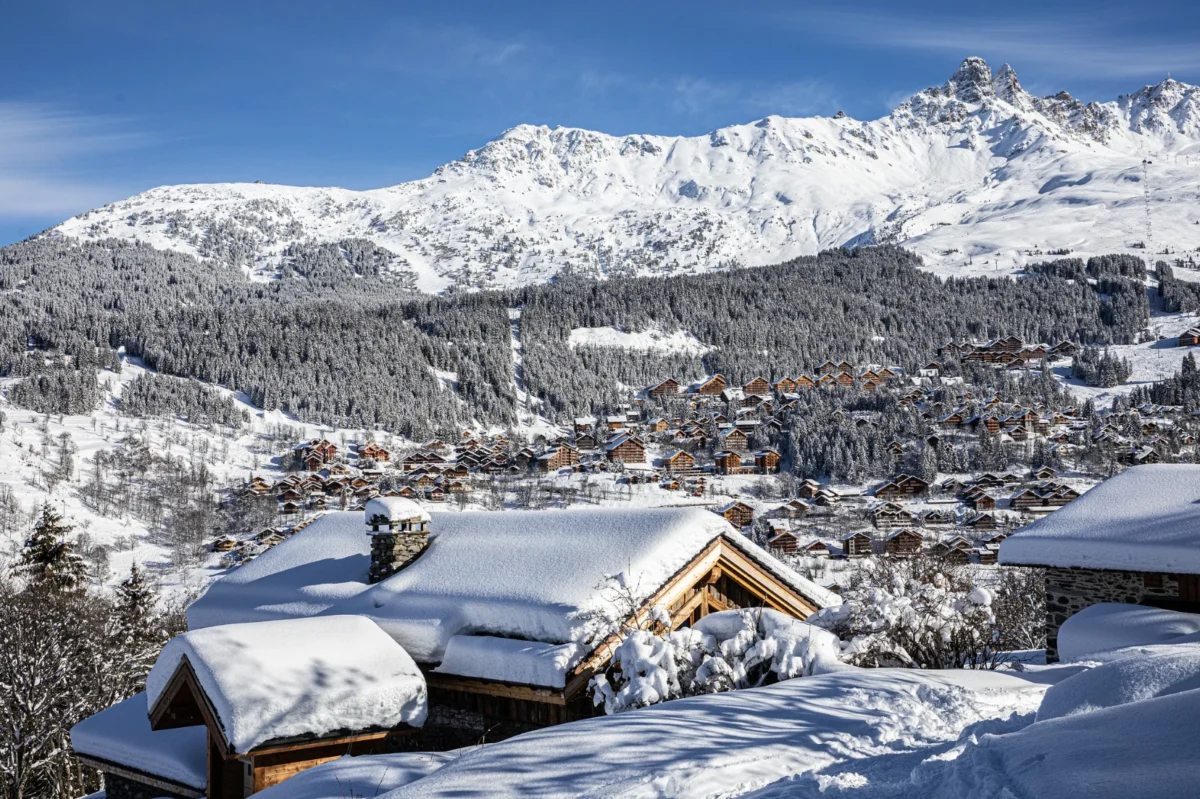
Understanding Méribel’s real estate market today first requires acknowledging a simple reality: supply no longer keeps pace with demand, and that gap shapes everything else. This is not a resort going through a favourable cycle like so many others before it. It is a market where buildable land has long since ceased to exist, where every chalet or apartment that becomes available is a rare event, and where an increasingly demanding international clientele competes for a stock that, by nature, cannot expand. This article explains the mechanisms behind this tension, without citing any unverified price figures, to provide a clear and honest reading of the situation.
What characterises Méribel’s real estate market today?
Méribel’s real estate market is characterised by a lasting tension between structurally limited supply and international demand that shows no sign of weakening. This imbalance is not cyclical. It stems from the valley’s geography, the regulatory framework governing construction in the mountains, and a deliberately restrictive planning policy maintained since the resort’s inception. The result is reflected in how quickly a quality property finds a buyer—often even before it appears on traditional marketing channels.
This scarcity does not affect only exceptional properties. It permeates the entire market, from a two-room apartment in the resort at Méribel-Mottaret to a family chalet in Le Belvédère. A buyer looking for a specific property, in a specific area, with a particular aspect or ski-in/ski-out access, quickly faces the same reality: choice is limited—and it is narrowing further. What often strikes buyers discovering Méribel after searching elsewhere in the Alps is how the most attractive transactions are handled upstream, through direct exchanges between professionals and owners, well before any public listing.
Another feature sets Méribel apart from other major Alpine resorts: its central position within the 3 Vallées area, making it a sought-after base for clients who ski as much in Courchevel as in Les Menuires or Val Thorens. This geographic centrality supports demand that does not depend on a single resort, which distinguishes Méribel from a typical local market.
Why does supply remain so limited in Méribel?
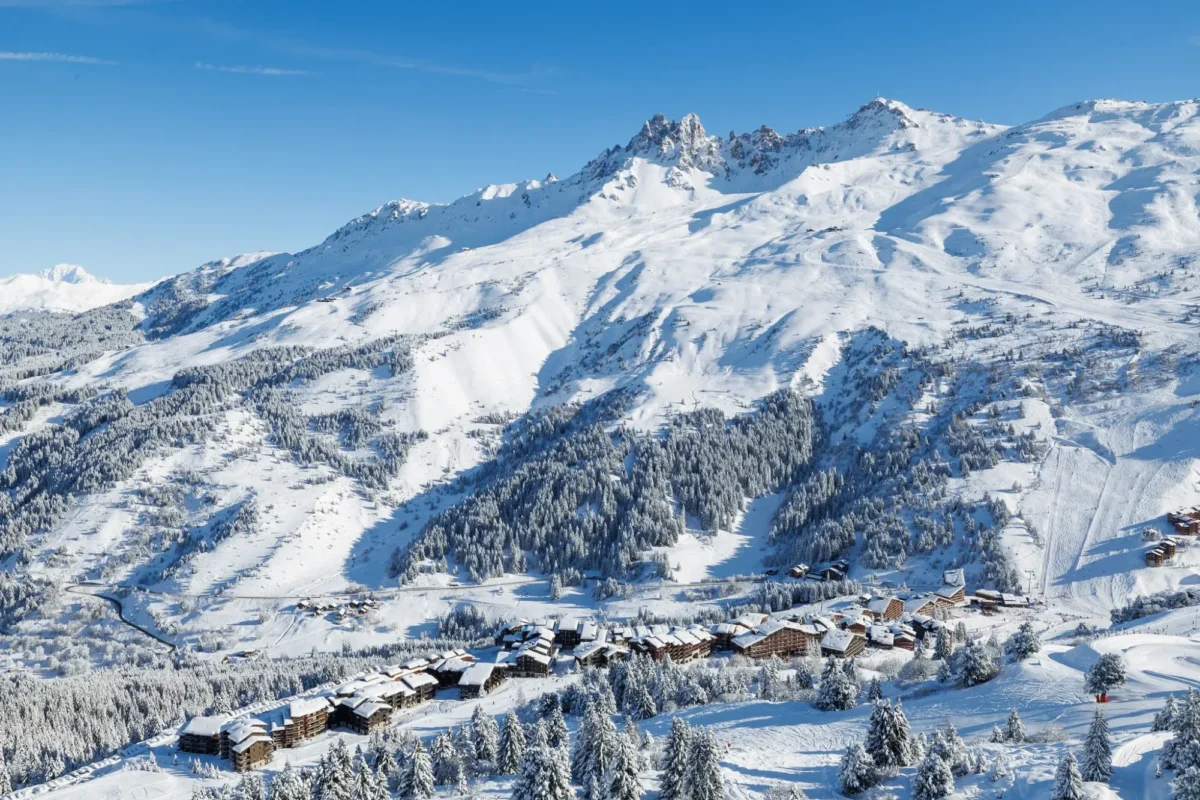
Supply remains limited in Méribel because new construction is governed by strict regulations and an architectural charter applied since the resort was founded. Unlike certain destinations that have been able to expand freely, Méribel was conceived from the outset as a mountain village to be preserved, and that philosophy continues to shape the market today.
An architectural charter inherited from the resort’s origins
When British Colonel Peter Lindsay discovered the Allues valley in 1938, the ambition was not to build yet another resort, but a village faithful to Alpine architecture. The first chalets were built to a precise specification: local stone, larch wood, slate roofs, and volumes inspired by traditional Savoyard buildings. In 1946, the planning scheme entrusted to architects Paul Jacques Grillo and Christian Durupt formalised this requirement. For the most part, it has never been relaxed. No tower blocks, no exposed concrete dominating the landscape: this discipline has preserved the character of the place, but it has also mechanically limited buildable volumes.
A legal framework that locks down mountain construction
To this local charter is added a national framework: the Mountain Law of 9 January 1985, which requires building in continuity with existing villages and protects alpine pastures from any urbanisation. In practical terms, a developer cannot extend a resort onto untouched high-altitude land. New developments are limited to areas already built up or designated in the local urban plan, which further reduces opportunities for new construction in Méribel. This dual constraint—heritage and legal—explains why land scarcity is not a marketing argument but a structural feature of the market.
A few reference points help a buyer gauge this reality day to day:
- Buildable land within the resort is virtually exhausted, shifting most transactions to existing properties.
- Each new development remains a rare event, often marketed confidentially before any public announcement.
- The architectural charter still applies to renovations, ensuring visual consistency across the resort’s thirteen hamlets.
Who is buying in Méribel today?
Buyers in Méribel today form an international, wealth-preservation clientele, increasingly attentive to year-round usability. The buyer profile has evolved along with the market itself. We are far from the occasional skier looking for a simple pied-à-terre for the season.
Some are primarily seeking a family home, designed to last and be passed on. Others think in purely wealth-preservation terms: securing a rare asset in a market where supply is, for all intents and purposes, never replenished. And there is an increasingly frequent desire in the enquiries we receive to own a property that truly lives year-round, rather than a chalet opened for three weeks in February. This last point concretely changes how a property is chosen: aspect, year-round access, and proximity to the village shops now matter almost as much as distance to the slopes.
This clientele comes from varied backgrounds—Northern Europe, the United Kingdom, Switzerland, Gulf markets—with one common point: a requirement for discretion in the transaction and a marked preference for properties that have never gone through traditional marketing channels. This is one of the reasons why a significant share of sales in Méribel is handled outside visible listing circuits.
New-build or resale: how should you read the two market segments?
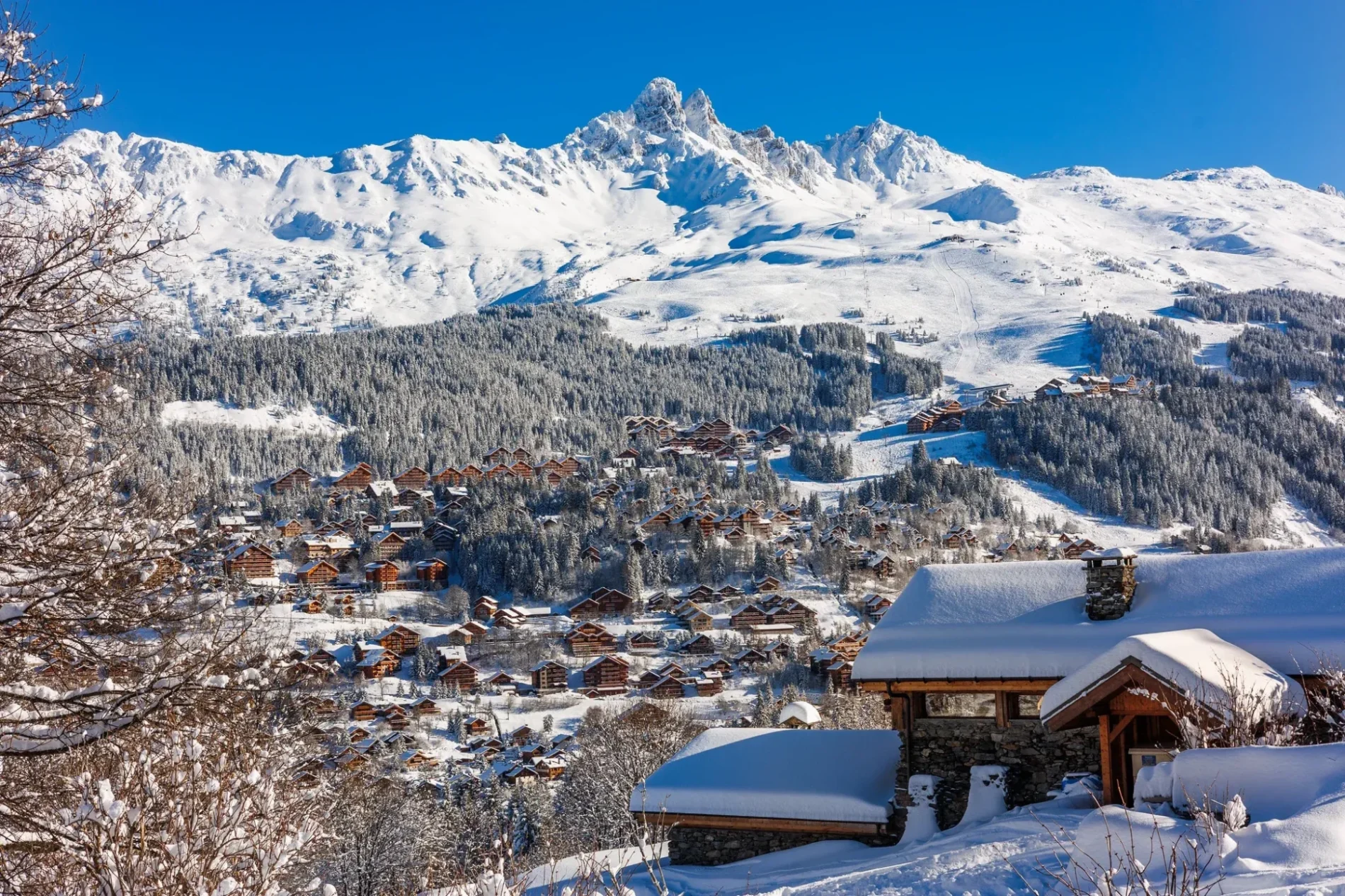
New-build and resale follow two distinct logics in Méribel, and confusing them leads to misjudging an opportunity. The new-build market, heavily constrained by the scarcity of buildable land, is limited to a few developments per year, often positioned at high specification standards and in locations already identified as strategic. These developments sell quickly, sometimes before their official commercial launch, to buyers seeking no renovation work and contemporary features.
Resale, by contrast, represents the bulk of transaction volume. It covers a far more heterogeneous reality: from an alpine pasture chalet requiring a complete renovation to an apartment already brought up to standard. It is also the segment where technical support makes the difference: an older chalet with renovation works misjudged can turn a wealth-preservation purchase into a far heavier project than expected. For this type of project, upfront expertise on the building’s condition, the constraints of the architectural charter, and value-enhancement potential can materially change the outcome of the transaction; this is precisely the role of project management support.
How should you approach a purchase in such a tight market?
Approaching a purchase in Méribel in a tight market requires reversing the usual method: do not wait for a property to appear, but position yourself upstream, with precise criteria and the ability to decide quickly. In a market where the best property rarely changes hands through a simple listing viewing, responsiveness and clarity of purpose matter as much as budget.
A few principles structure an effective search in this context:
- Define a precise need before you start looking: property type, area, aspect, winter and summer use, rather than an overly broad search that dilutes effort.
- Accept that the best properties circulate little—or not at all—outside a trusted network, which makes the quality of support decisive.
- Anticipate the scope of works or renovation, often underestimated in a market where resale overwhelmingly dominates transaction volume.
- Check the project’s long-term wealth-preservation coherence—succession, family use, resale potential—rather than relying solely on a gut feeling.
It is this patient, well-documented method that makes it possible to turn scarcity into an advantage: a well-chosen property in a closed market retains, by construction, a value that few other Alpine locations can offer. Our team presents a selection of properties in Méribel, updated as opportunities are identified.
Key Takeaways
- Méribel’s market is structurally tight: land scarcity, imposed by the historic architectural charter and by the Mountain Law, durably limits new-build volumes.
- Demand remains driven by an international wealth-preservation clientele, increasingly attentive to year-round use, in winter as well as summer.
- New-build and resale follow different logics: new-build is becoming rarer and sells quickly; resale makes up most of the market but requires genuine expertise on the building’s condition.
- A successful purchase is prepared upstream, with precise criteria and support capable of accessing properties that never circulate publicly.
FAQ
Is Méribel’s real estate market still as tight as before?
Yes. The tension does not depend on an economic cycle but on structural constraints—limited land, a strict architectural charter, the Mountain Law—that do not ease over time. Limited supply remains a lasting feature of the market.
Why are so few new developments built in Méribel?
New construction is constrained by the lack of buildable land and by a regulatory framework that protects the surrounding natural areas. The few developments available are therefore positioned at high standards and are often marketed confidentially.
Is it better to buy a resale property or a new-build property in Méribel?
It depends on the project. New-build offers contemporary features with no renovation work, but supply is limited. Resale offers a wider choice and value-enhancement potential, provided the building’s condition is assessed precisely before purchase.
How can you access properties that are not publicly listed in Méribel?
A significant share of transactions in Méribel is handled outside traditional listing channels, via a trusted network between professionals and owners. Relying on specialised support remains the most effective way to access them.
Does Méribel’s dual seasonality influence property values?
Yes. A chalet or apartment that can be used in summer as well as winter offers greater lifestyle value in the eyes of an international clientele, which strengthens its wealth-preservation appeal compared with a property designed solely for the ski season.
Final Word
Ultimately, this market cannot be read like the others. Scarcity is not a commercial argument here but a lasting reality, shaped by the resort’s history and by a regulatory framework that will not change tomorrow. In this context, preparation and the quality of support often make more difference than purchase timing alone. Our team remains at your disposal to discuss your project and present the properties available in Méribel, including those that are never made public. To discuss this, you may contact us directly.